
BROOKLYN NIGHT FEVER
Articles:
The Advent of Disco: How Marginalized Dance Floors Reshaped Popular Music
The Loft: Where the Party Became a Philosophy (1970s–Present Influence)
Paradise Garage: The Temple of Sound and the Power of the Dance Floor (1977–1987)
Studio 54: Glamour, Spectacle, and the Birth of Club Celebrity (1977–1980)
The Last Days of DIY
by Grayson Joralemon
The Advent of Disco: How Marginalized Dance Floors Reshaped Popular Music
Disco did not begin as a genre, a fashion, or a commercial movement. It began as a solution—a response to exclusion, surveillance, and the need for communal release among people pushed to the margins of American society. Long before disco records dominated radio or dance floors glittered under mirror balls, disco existed as a practice: extended dancing to recorded music in spaces where freedom could briefly be rehearsed.
From Postwar Dance Halls to Underground Sanctuaries
The roots of disco can be traced to the post–World War II era, when urban nightlife increasingly moved indoors and dancing to recorded music became economically and logistically preferable to live bands. By the late 1950s and early 1960s, “discothèques”—a French term for clubs that played records—had begun appearing in Europe, especially in Paris, before the concept migrated to the United States.
In New York City, this model took on new meaning. As bars and clubs faced intensified policing, particularly after the Stonewall era, gay men—especially Black and Latino men—were routinely harassed, denied entry, or forced into illicit spaces. Many early disco venues were technically illegal, operating without liquor licenses or under constant threat of shutdown. Ironically, these constraints helped shape disco’s core aesthetics: no live band, long uninterrupted records, dim lighting, and dancers facing one another instead of a stage.
A Music Built for the Body, Not the Charts
Early disco drew heavily from soul, funk, R&B, Latin rhythms, and Afro-diasporic percussion, emphasizing steady, hypnotic beats over verse-chorus structures. DJs extended tracks using reel-to-reel tape, edits, and multiple copies of the same record to keep dancers in motion. This was not background music—it was functional, designed to sustain energy, encourage trance-like states, and unify diverse bodies on the floor.
Crucially, disco culture was DJ-led rather than artist-led. Figures like David Mancuso, Nicky Siano, and later Larry Levan shaped nights through careful sequencing and emotional pacing. The DJ became a curator of feeling, responding to dancers in real time. This dynamic relationship between crowd and selector distinguished disco from earlier popular music forms.
Disco as Social Practice
Disco flourished in spaces that rejected mainstream hierarchies. Private parties like The Loft, early clubs like The Gallery, and later institutions such as Paradise Garage prioritized sound quality, safety, and inclusivity over spectacle. These environments allowed people—particularly queer communities, people of color, and women—to express sensuality and joy without fear.
The dance floor itself became a temporary utopia, where traditional social divisions dissolved. Disco encouraged participation rather than performance. There were no front-facing stages; dancers became both audience and spectacle. Clothing, movement, and identity could be experimented with, reimagined, or shed entirely for the duration of the night.
Technology, Records, and the Birth of the Remix
Disco’s rise coincided with advances in audio technology. High-powered sound systems, improved vinyl mastering, and the emergence of the 12-inch single allowed for louder, longer, and more dynamic records. Producers began tailoring tracks specifically for clubs, extending instrumental sections and emphasizing bass and rhythm.
This shift gave rise to the remix as a creative form. DJs and engineers restructured songs for the dance floor, often before radio or commercial release. In this way, disco inverted the traditional music industry pipeline: club response dictated production decisions, not the other way around.
From Underground Movement to Cultural Flashpoint
By the mid-1970s, disco’s popularity surged beyond its original communities. Artists like Donna Summer, Chic, and Gloria Gaynor brought disco into the mainstream, while clubs like Studio 54 turned it into a global spectacle. This visibility brought commercial success—but also backlash. The “Disco Sucks” movement of the late 1970s, often framed as a musical critique, carried strong undercurrents of homophobia, racism, and resistance to cultural change.
Despite this backlash, disco never truly disappeared. Instead, it mutated—giving rise to house music in Chicago, techno in Detroit, and countless forms of electronic dance music worldwide.
Disco’s Enduring Legacy
The advent of disco marked a turning point in modern culture. It redefined how music was made, played, and experienced; elevated the DJ as an artist; and established the dance floor as a site of political and emotional significance. Disco was not simply escapism—it was collective survival, rhythm as refuge, and sound as social architecture.
In creating spaces where marginalized communities could gather, move, and be seen on their own terms, disco laid the foundation for nearly every form of contemporary dance music that followed. Its advent was not a trend, but a transformation—one that continues to reverberate wherever people gather to dance in the dark.
The Loft: Where the Party Became a Philosophy (1970s–Present Influence)
Before clubs, before DJs as stars, before dance floors as commodities, there was The Loft. Founded by David Mancuso in 1970, The Loft was not a commercial venue but a private party held in Mancuso’s own home at 647 Broadway. What began as an invitation-only gathering among friends became the conceptual blueprint for modern dance culture.
The Loft rejected nearly every convention of nightlife. There were no alcohol sales, no stage, no lighting effects, no promotion. Instead, Mancuso focused obsessively on sound fidelity, playing records at their original speed, with full dynamic range, on meticulously calibrated audiophile systems. Music selections ranged widely—soul, funk, disco, African, Latin, rock—but were united by emotional warmth, rhythm, and humanity. Unlike contemporary DJ culture which thrives on “mixing” tracks into a cohesive hole, The Loft, per Mancuso’s instruction, continues to play tracks from start to finish.
Crucially, Mancuso did not consider himself a DJ. He did not beat-match or manipulate records; he presented music as a host, trusting dancers to find their own rhythm. This approach fostered a dance floor defined by mutual respect, inclusivity, and freedom. The Loft welcomed gay, straight, Black, white, artists, activists, and outsiders alike, at a time when such integration was far from common.
The Loft’s influence radiated outward. Many future club founders, DJs, and producers—including Larry Levan, Nicky Siano, and Frankie Knuckles—passed through its orbit. The emphasis on sound systems, community, and musical storytelling became foundational to disco, house, and underground club culture worldwide.
Though The Loft never sought fame, its legacy is arguably the deepest of all. It established the idea that a dance party could be intentional, ethical, and transformative—a place not of excess, but of connection. In this sense, The Loft was not just the first modern dance party; it was the soul from which the entire culture grew.
Although Mancuso died in 2016, The Loft continues to host parties. It keeps his spirit alive with the sentiment: Love Saves The Day!
Paradise Garage: The Temple of Sound and the Power of the Dance Floor (1977–1987)
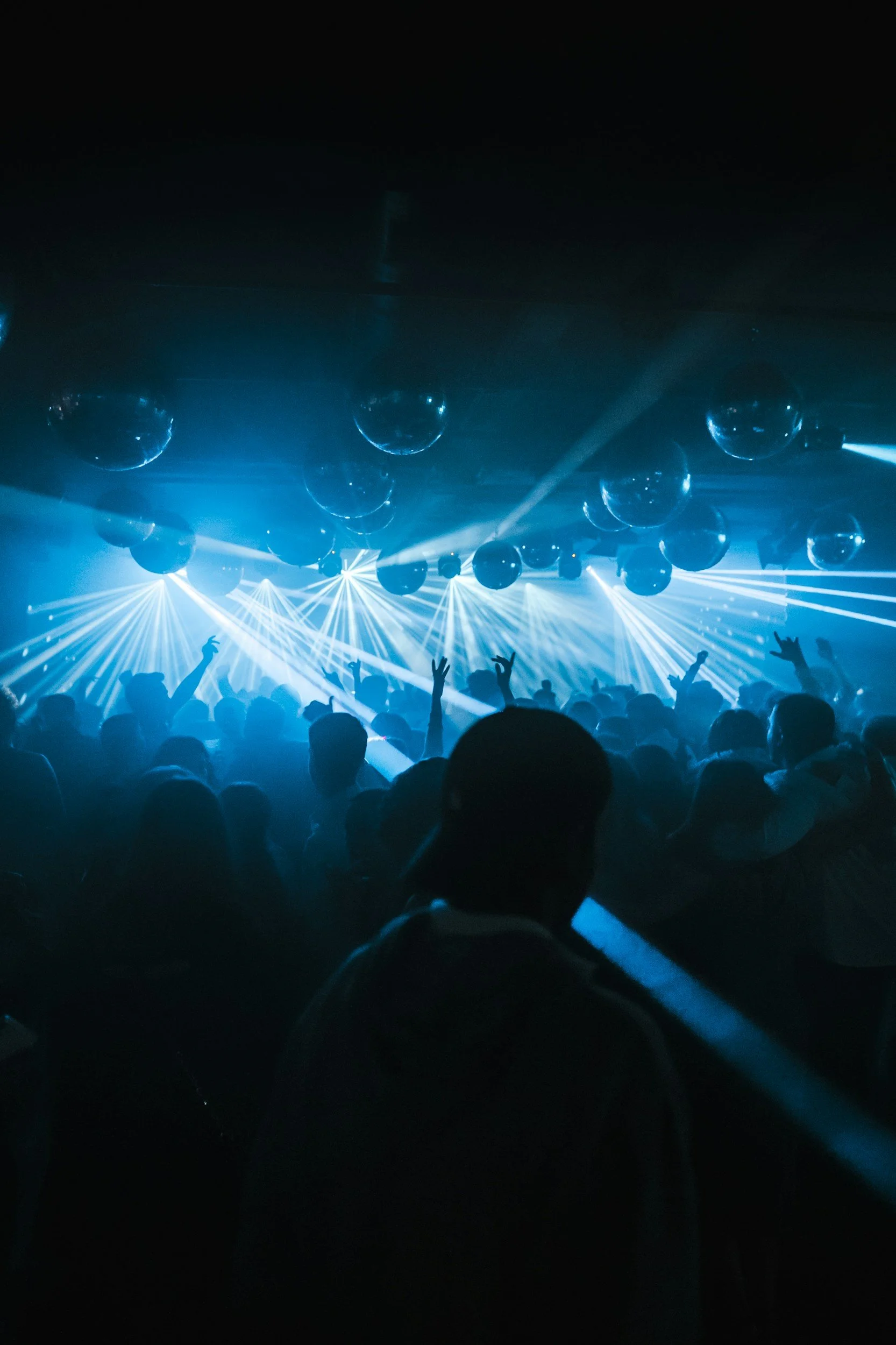
Paradise Garage was about devotion. Opened in 1977 at 84 King Street in SoHo, the Garage was not a club in the traditional sense—it had no liquor license, no dress code, no mirrors, and no celebrity door. What it offered instead was something far more radical: music as religion.
Founded by Michael Brody and anchored by resident DJ Larry Levan, Paradise Garage became the epicenter of a new philosophy of dance culture—one rooted in sound quality, emotional intensity, and communal release. The club’s legendary sound system, designed by Richard Long, was among the most powerful and precise ever built, transforming the dance floor into a physical, almost spiritual experience.
Larry Levan’s role cannot be overstated. His DJ sets were not performances but journeys—slow-burning, emotionally complex narratives that blended disco, soul, funk, early electronic music, dub, and experimental edits. He played with mood, silence, tension, and vulnerability, often guiding dancers through ecstatic highs and introspective lows in a single night. The crowd—predominantly Black, Latino, gay, and working-class—responded with fierce loyalty and emotional openness.
Paradise Garage also functioned as a laboratory for new music. Tracks by artists like François Kevorkian, Arthur Russell, and early house producers were tested, reshaped, and canonized on its floor. The term “garage music” itself emerged from this ecosystem, laying the groundwork for house, deep house, and later club genres worldwide.
When the Garage closed in 1987 due to lease issues, its absence left a profound void. Yet its influence persists in DJ culture, sound system design, and the idea that a club can be a sanctuary—a place where music transforms identity and community rather than simply entertaining it.
Today Richard Long’s legendary soundsystem lives on at the Eldorado Auto Skooter (bumper cars) in Coney Island.
Studio 54: Glamour, Spectacle, and the Birth of Club Celebrity (1977–1980)
Studio 54 opened in April 1977 inside a former CBS television studio at 254 West 54th Street, arriving at the precise moment disco was cresting into mainstream consciousness. Founded by Steve Rubell and Ian Schrager, the club was conceived less as a dance space and more as a theatrical event—a place where nightlife, celebrity, sexuality, and excess collided under one roof.
From the beginning, Studio 54 distinguished itself through curated exclusion. Rubell’s famously capricious door policy elevated entry itself into a form of social currency. Celebrities mixed with models, artists, socialites, and outsiders who somehow slipped through, creating a volatile blend of aspiration and unpredictability. The room itself reinforced spectacle: a massive dance floor, balconies, theatrical lighting, falling glitter, a moon-and-spoon installation, and aerial performers transformed the club into a living stage.
Musically, Studio 54 was unapologetically disco-forward, favoring polished, orchestral tracks by artists like Donna Summer, Chic, and Gloria Gaynor. DJs such as Richie Kaczor played to the drama of the room rather than underground experimentation, reinforcing disco as pop culture rather than subculture. The music served the crowd’s desire to see and be seen, rather than to lose themselves anonymously.
Studio 54’s reign was brief but explosive. In 1978, Rubell and Schrager were indicted for tax evasion, and by 1980 the original iteration had ended. Yet its cultural legacy endures: Studio 54 defined the idea of the nightclub as a global symbol, introducing celebrity culture, fashion, and hedonism into nightlife in ways that continue to shape VIP culture today. It represented disco at its most visible, decadent, and mythologized—both celebrated and criticized as the moment the underground went mainstream.
The Last Days of DIY
Remember seeing a chopped-up photo-collaged flyer? If you’ve pictured this flyer digitally, your memory’s failed you. It was photocopied on cheap paper and taped to a light post on Bedford ave. It’s okay, it’s been awhile. In truth, to remember this time requires collective reconstruction. The distinct nights and individual parties are now hard to untangle alone. The scenes are fragments. Also most of us were too impaired to capture the moment.
If you can’t remember, or you were never there, what I’m about to tell you sounds like myth. But it was real, and it was magic.
Not so long ago, there was a place called Williamsburg. Okay, technically this geographical location still exists, but before the highrises and hotels, before Hermes and Chanel, there was a time when Williamsburg was the place to be for artists of all kinds. Back then it was an expanse of rundown warehouses, illegal loft rentals, and a waterfront blocked off by a fence that was only scalable by the tall and drunkenly emboldened. Most significantly, it was home to almost a dozen DIY spaces where you could hear music, see art, and party until the next afternoon, or the one after that if that was your thing.
You see, in the aughts and early 10s, most of Williamsburg nightlife wasn’t city-sanctioned, hence “DIY”. This is not to say that a liquor license meant being on the up and up. One of the best “legitimate” bars sold $20 bags of coke openly. (RIP Kokie’s!) The DIY spaces were just as legendary: Glasslands, 285 Kent, and Death By Audio (DBA), to name a few. They may not have had a liquor license but they had bars, of the folding table variety.
At this time “Indie” music was at its height with about as many sub-genres as bands (indie pop, indie electro, indie rock and post-punk, etc.). These DIY spaces gave rise to bands prominent and active today, most notably LCD Soundsystem and TV on the Radio. If you were in Brooklyn then, your luck was to be dancing, drenched in the collective sweat of party denizens while someone from a band under DFA Records played a djset unannounced.
The cigarettes moke and bodyheat made steam too thick to escape from cracked windows, if the space even had windows.
A DIY party never ran out of djs or dancers.
It only ever ran out of booze and toilet paper.
It was gross.
It was heaven.
If you were part of this culture, whether an originator or guilty by association, there were clear signs. One can be summed up in the word “hipster”. The meaning of that word requires a whole other essay (lmk if you’re interested!). Debauchery was also a key aesthetic. Things would get real sleazy around 3am. If your thickly applied eye-liner had reached your cheek by then– you had the look.
Whether you remember it or not, you didn’t necessarily have to be here to see it. The grainy images of people snorting drugs off bathroom floors were captured by a magazine devoted to documenting exactly what its title promised: VICE. Pictures of our deviance could be found in American Apparel stores across the country. Maybe you even appeared in the back pages of the mag where mostly unsolicitedly pics of partygoers were labeled and captioned as dos or don’ts.
Were you a do or don’t?
Do you even remember?
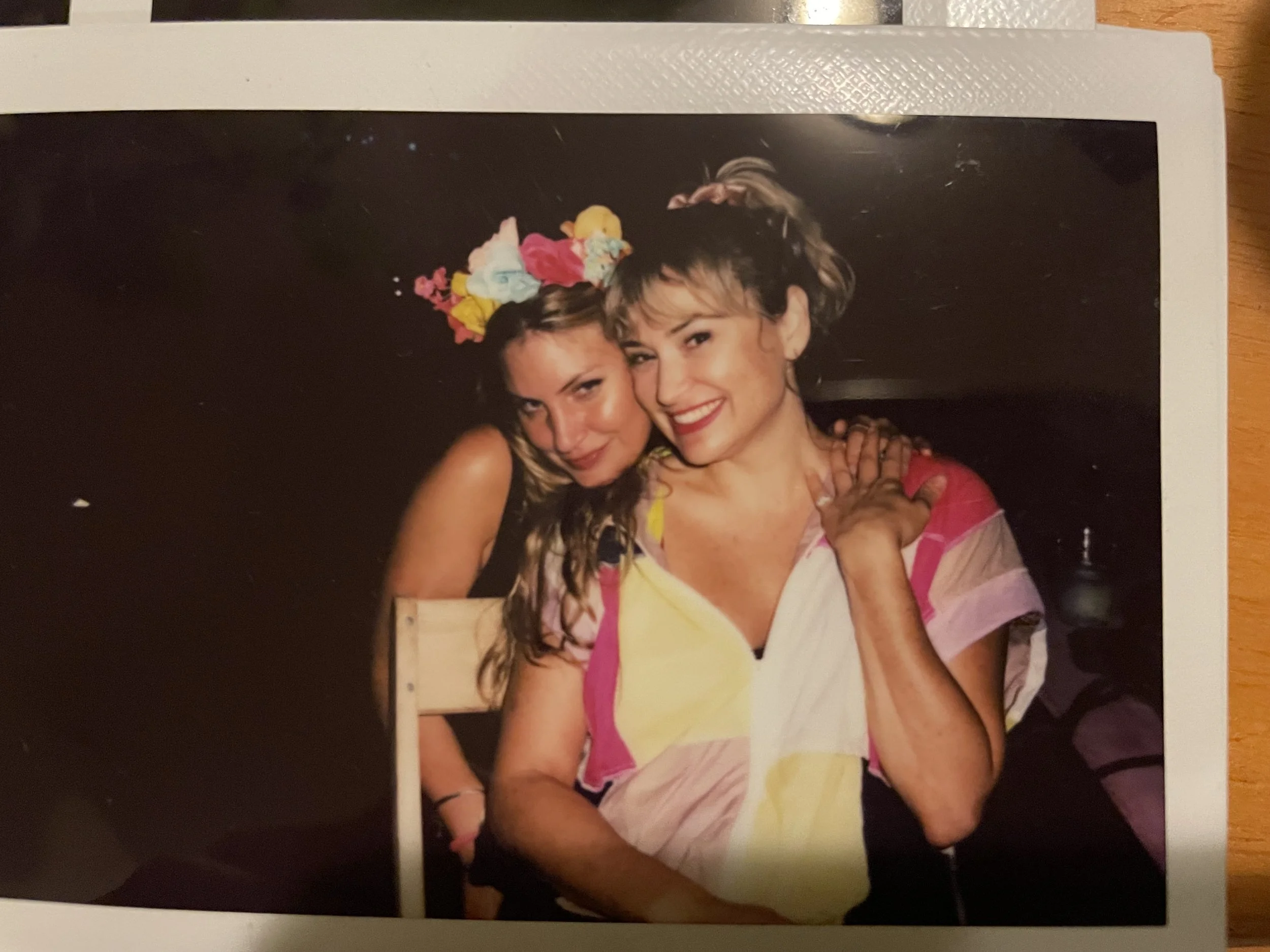
It's okay. The piecemeal memories of the nights can fade. The sentiments mean far more than the specifics. And if we do want details, we can phone a friend. Afterall, good memories are better remembered together.